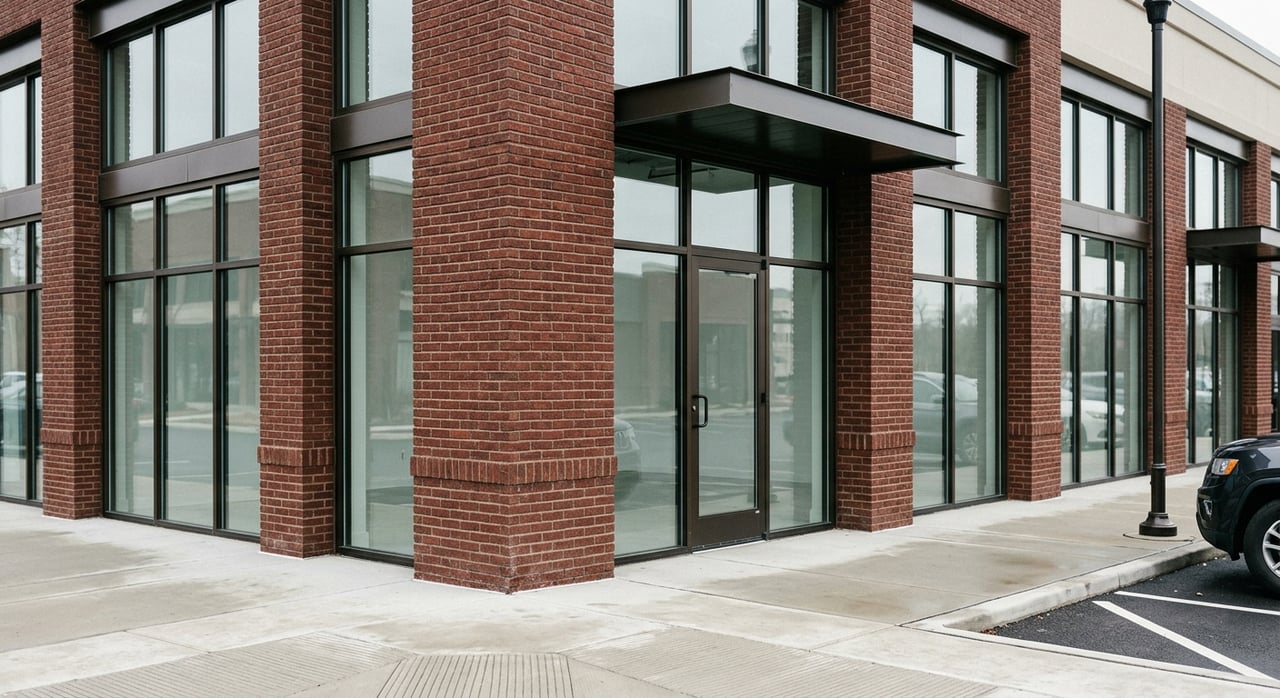
If you are looking at a retail center investment in North Nashville, it is easy to get pulled in by the story alone. Tight metro vacancy, visible corridors, and ongoing public investment all make the area feel compelling. But in North Nashville, the best deals usually come down to something more practical: how well the lease, access, and entitlement path hold up under real underwriting. Let’s dive in.
North Nashville Is a Corridor Market
North Nashville is not one uniform retail submarket. It is better understood as a set of corridor nodes, with areas shaped by local planning policy, access patterns, and block-by-block retail conditions.
That matters because a property on or near Jefferson Street may perform differently from a similar asset tied to another corridor or redevelopment area. Metro planning context also shows that North Nashville includes supplemental policy areas such as Neuhoff and 41st/Indiana, which can influence how a site evolves over time.
The broader Davidson County consumer base supports neighborhood retail demand. Census data shows an estimated county population of 745,904 as of July 1, 2025, median household income of $77,853, and retail sales of $23.6 billion in 2022.
Still, countywide strength should not replace trade-area analysis. For a North Nashville retail center, you need to underwrite the immediate customer base, circulation, and tenant fit around the property itself.
Retail Fundamentals Still Support Small Centers
The Nashville retail market remains tight. Colliers reported Q1 2025 vacancy at 3.9%, marking the 10th straight quarter below 4%, while asking rents reached $24.88 NNN after increasing about 33% since 2020 and 4.6% over the prior 12 months.
That backdrop is helpful if you are evaluating neighborhood centers, strip centers, or single-tenant pads. Colliers also noted that Q1 absorption was driven primarily by move-ins in North Nashville, which makes the submarket especially relevant for investors focused on local momentum.
National trends also line up with this asset type. CBRE said grocery-anchored centers, neighborhood and strip centers are positioned to outperform for occupancy and rent growth in 2026, while JLL reported positive U.S. retail net absorption of 11.9 million square feet in Q4 2025 and $60 billion in 2025 retail transaction volume.
Just as important, leasing demand continues to favor smaller spaces. JLL found that nearly 70% of Q4 2025 leases were 2,500 square feet or less, and almost 90% of newly leased space was under 5,000 square feet.
Why Smaller Format Often Wins
In North Nashville, smaller-format retail can offer a cleaner investment story than larger boxy assets. IPA’s Nashville 1Q 2026 retail report noted that properties over 50,000 square feet had vacancy above 6%, while smaller buildings remained near 2% vacancy.
That gap matters when you think about leasing risk. A neighborhood center with right-sized suites may have more flexibility to capture daily-needs, service, and value-oriented demand than a large-format property that needs fewer but bigger tenants.
You can also see this in lease term data. CBRE reported that through the first three quarters of 2024, the average retail lease term rose to 96 months, with 1,000- to 4,999-square-foot spaces averaging 95 months and neighborhood, community, and strip centers averaging 92 months.
For investors, that can support more predictable cash flow if the tenant lineup is sound. In markets with strong population growth, including Nashville, CBRE also saw some of the biggest increases in lease terms.
The Lease Is Often the Real Business Plan
For many North Nashville retail acquisitions, the lease matters as much as the building. A clean-looking property can underperform if the rent roll has weak expense recoveries, short remaining term, or landlord-heavy obligations.
ICSC notes that retail leases in this asset class are commonly net leases. In those structures, tenants typically pay their share of common-area costs, real estate taxes, and insurance, though some leases may also include percentage rent or marketing charges.
That is why a single-tenant pad and a multi-tenant center should not be viewed the same way. A durable tenant with a clear triple-net structure, predictable rent bumps, and a strong guaranty is usually easier to underwrite than a multi-tenant center with uneven lease language and variable landlord exposure.
ICSC also notes that modified gross and gross structures shift some or all of that cost risk back to the landlord. Fixed CAM can create certainty for tenants, but it can also leave the owner more exposed if operating expenses rise.
What to review in a retail lease
Before you price a deal aggressively, review these items closely:
- Lease type and expense recoveries
- Remaining lease term
- Renewal options
- Annual rent steps
- Guaranty strength
- Landlord repair or work obligations
- Percentage rent terms, if any
- Tenant sales productivity, if percentage rent is involved
ICSC notes that a typical retail lease is often a 10-year triple-net lease with annual bumps of 3% to 5%. But shorter-term structures or base-rent-plus-percentage-rent deals may make more sense for emerging concepts or nonstandard space.
Tenant Mix Should Match Daily Demand
Tenant mix is one of the clearest filters for North Nashville retail underwriting. Stronger demand is still concentrated in grocery, discount, service, fitness, and other necessity-oriented concepts.
JLL’s Q4 2025 retail report listed top retail tenants such as Crunch Fitness, Rural King, Planet Fitness, Burlington, TJX, and Kroger. While those are not direct comps for every North Nashville asset, they reflect the continued strength of value and everyday-needs retail.
For a neighborhood center, this points to durability over novelty. A rent roll built around uses that fit regular consumer trips may be easier to finance, lease, and hold than one leaning heavily on purely discretionary spending.
That does not mean every center should look the same. It means you should ask whether the mix supports repeat visits, practical convenience, and stable occupancy at the scale of the immediate corridor.
Access and Visibility Matter More Than Frontage Alone
In North Nashville, visibility is not just about how many cars pass a site. It is also about how the corridor is changing and whether future access improves or complicates the customer experience.
Metro says the Jefferson Street Corridor Study is part of Choose How You Move and is intended to improve sidewalks, signals, service, and safety while maintaining the corridor’s character. The study area includes 26,975 residents, which reinforces the importance of local-serving retail along the corridor.
Metro also says Jefferson Street bikeway improvements create a new connection across the Cumberland River to Dickerson Pike and, in the future, to Nissan Stadium and River North. NDOT is also advancing a Jefferson Street intersection project at 21st and 28th Avenues North with an estimated cost of $3.9 million.
For investors, those improvements can be positive over the long term. Better safety, connectivity, and pedestrian access can support retail value, but construction timing, driveway changes, and evolving corridor design standards can also create short-term friction.
What access diligence should cover
When you evaluate a site, look beyond basic frontage and traffic assumptions. Focus on practical access questions such as:
- Parking layout and circulation
- Curb-cut rights
- Ingress and egress constraints
- Sign visibility
- Sidewalk and pedestrian interface
- Proximity to planned corridor projects
- How future street design could affect the site plan
Public Realm Investment Can Change the Story
North Nashville retail does not operate in isolation. Public infrastructure and mixed-use planning can gradually reshape customer movement, tenant demand, and future redevelopment pressure.
The city’s 41st/Indiana planning work is a good example. Metro Planning Commission staff said the T4 Urban Mixed Use Neighborhood policy is intended to support mixed-use development with high connectivity, complete streets, sidewalks, bikeways, and existing or planned mass transit.
That same report says new street connections, new access points, and sidewalks were vital to intensification. If you are underwriting nearby retail, those details matter because circulation changes can affect how a center is reached, experienced, and repositioned over time.
Neuhoff offers another example. The SPA for that property area allows additional mixed-use intensity tied to engagement with the Cumberland River, the greenway, and the Jefferson Street transit corridor, while emphasizing active uses, pedestrian-scaled design, and parking placement that protects the pedestrian realm.
At a broader level, Metro says the East Bank area north of Jefferson Street to Interstate 65, including River North and Oracle, shares infrastructure that should be considered in the same context as the rest of the East Bank. With more than 500 acres involved and planned public and private funding for roads, sidewalks, bike facilities, plazas, and utilities, nearby retail patterns may keep evolving for years.
Entitlement Risk Can Reshape Returns
A site may look straightforward until zoning and overlay rules enter the picture. In North Nashville, entitlement diligence should happen early, especially if your investment thesis depends on redevelopment, added density, or a new retail format.
Metro says zoning rules govern land use and development standards, and planning staff reviews proposed zone changes against the community plan plus any additional guidelines such as overlays, local planning studies, and supplemental policies. Metro also says zone changes typically take 3 to 6 months if there are no complications.
That timeline is important because a site that needs rezoning should be valued differently from one that is already zoned and ready. Paying today for upside that still depends on staff review, public notice, Planning Commission action, and Council approval can quickly distort returns.
Urban Design Overlays can add another layer. Metro says these overlays can regulate building placement, height, floor area, architectural features, streetscape elements, bikeways, transit facilities, parking and loading, landscaping, and signage.
Entitlement questions to answer early
If your plan goes beyond a simple hold, ask these questions before you commit:
- Is the current zoning aligned with the intended use?
- Is the site affected by a UDO, SP, or SPA?
- Do community plan policies support the concept?
- Are signage, parking, or loading constrained?
- Will streetscape or frontage requirements change the site plan?
- Is your timeline realistic if approvals are needed?
A Practical Underwriting Framework
If you are comparing retail center opportunities in North Nashville, it helps to reduce the story to a few decision points. The strongest investments usually combine durable leases, practical access, realistic entitlement assumptions, and tenant demand tied to everyday use.
A promising location alone is not enough. You want to know whether the lease structure protects cash flow, whether the site works operationally, and whether public projects or planning controls support or complicate the business plan.
That is where local, principal-led advice can make a difference. In a corridor market like North Nashville, the details behind the rent roll, access pattern, and planning path often separate a stable investment from an expensive lesson.
If you are evaluating a North Nashville retail acquisition, repositioning plan, or disposition strategy, NEW SOUTH COMMERCIAL can help you pressure-test the opportunity with practical, owner-minded market insight.
FAQs
What makes North Nashville retail different from other Nashville submarkets?
- North Nashville functions more like a set of corridor nodes than one uniform retail market, so trade-area strength, access, and local planning context matter more than broad county averages alone.
What lease structure is common for North Nashville retail centers?
- Net leases are common in this asset class, with tenants often paying their share of common-area costs, taxes, and insurance, while modified gross or gross leases can shift more operating cost risk back to the landlord.
Why are smaller retail centers often attractive in North Nashville?
- Market data shows smaller buildings have remained much tighter on vacancy than larger retail properties, and national leasing trends continue to favor suites under 5,000 square feet.
How important is tenant mix in a North Nashville retail investment?
- Tenant mix is critical because demand remains strongest for grocery, discount, service, fitness, and other daily-needs concepts that can support repeat visits and more stable occupancy.
Should you underwrite future corridor improvements into a retail deal?
- You should consider them carefully, since better sidewalks, signals, bikeways, and street connections may improve long-term value, but construction impacts and access changes can also create short-term risk.
How risky is it to rely on rezoning for a North Nashville retail project?
- It can add meaningful risk because Metro reviews zone changes against the community plan and related controls, and even uncomplicated applications typically take 3 to 6 months.