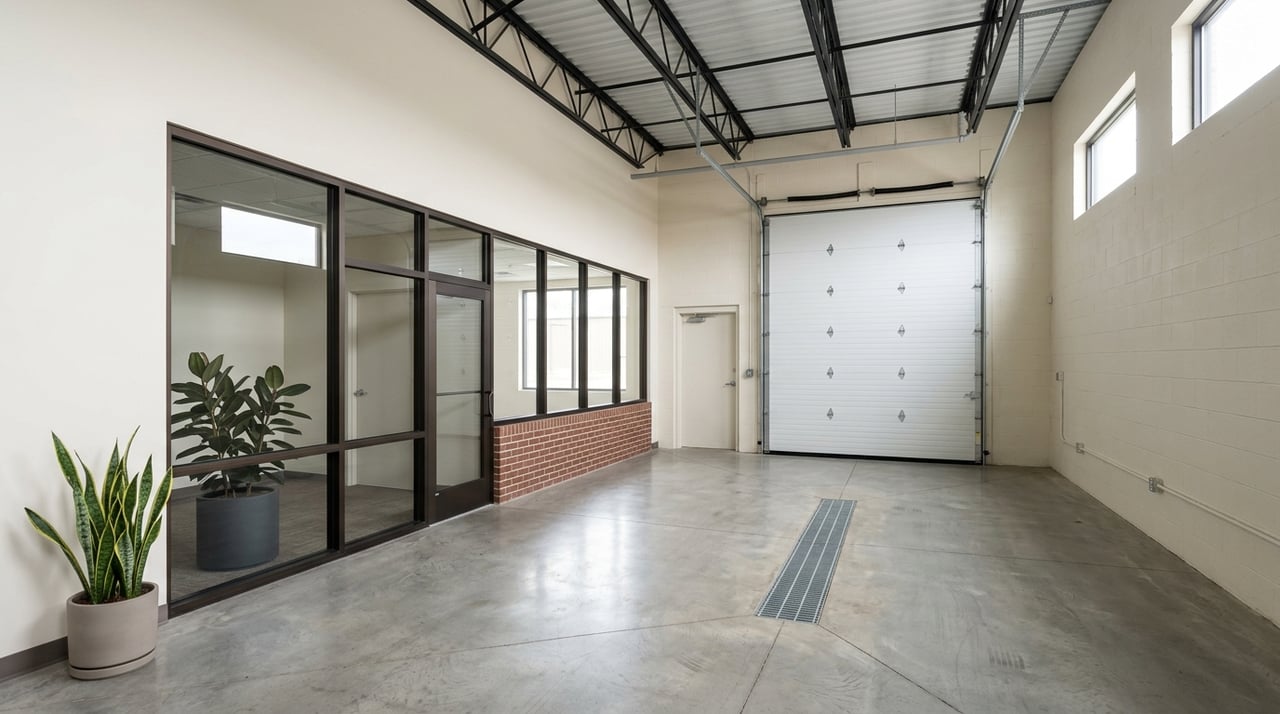
If you need flex space in South Nashville, the biggest challenge is not finding a building. It is finding one that actually works for how your business moves, loads, parks, and grows. In a part of town where industrial, retail, and mixed-use patterns often sit side by side, the right space can save you time, reduce friction, and support better day-to-day operations. This guide will help you understand what makes South Nashville logistics-friendly, what tradeoffs to expect, and how to evaluate space with confidence. Let’s dive in.
Why South Nashville Works for Flex Users
South Nashville is not a single-purpose industrial district, and that matters when you start your search. Metro planning documents describe it as an area where industrial, commercial, and changing land uses overlap, especially in older sections such as Wedgewood-Houston and Chestnut Hill. That mix creates opportunity for smaller operational users, but it also means you need to look closely at each site rather than assume every property will function the same way.
For many occupiers, the appeal starts with location. Metro’s Nolensville Pike analysis places this part of South Nashville within reach of I-65, I-24, I-440, and Thompson Lane and Briley Parkway, with downtown nearby and the airport just beyond I-24. If your business depends on serving customers across Nashville quickly, that centrality can be a real advantage.
Another reason South Nashville stands out is visibility. Along major corridors, traffic counts are strong, including nearly 75,000 vehicles daily at Harding Place and about 60,000 at Thompson Lane. That kind of exposure can support businesses that need a mix of warehouse function, service access, and customer-facing presence.
What “Logistics-Friendly” Really Means
Not all flex space is logistics-friendly, even if it is labeled industrial or warehouse. In South Nashville, a practical building usually needs more than a roll-up door and a small office. It needs a site plan that supports movement, access, and day-to-day operations without constant workarounds.
Metro planning studies point to several features that matter most for operational users. These include designated truck access and parking, sufficient staging space, curb-cut management, and clear separation from nearby non-industrial uses. In simple terms, the building has to work not just on paper, but in motion.
That is especially important in South Nashville because many parcels are older, smaller, and shallower than what you might find in larger suburban industrial parks. The Nolensville Pike corridor study notes that parcels from I-440 to Grassmere are relatively small and shallow, which can limit expansion and reduce flexibility for larger users. If your operation depends on heavy truck circulation or future yard growth, this detail should be near the top of your checklist.
Best-Fit Businesses for South Nashville Flex Space
South Nashville tends to fit businesses that need central access more than massive scale. Based on Metro planning studies, the local mix is well suited for warehouse and distribution users, trucking-related firms, light manufacturing, wholesale trade, construction supply, contractors, and craft or small-batch manufacturing. Food and beverage producers and distributors, testing and maintenance companies, and building-supply businesses can also be a strong fit.
In practice, that means South Nashville often works best for regional companies that need a hybrid setup. You may want office space up front, warehouse space in back, parking for staff and vans, and quick interstate access for deliveries across the metro. That kind of profile lines up well with the district’s central, infill character.
By contrast, South Nashville is usually less ideal for pure bulk-distribution operations that need very large footprints. Planning documents note that Davidson County has relatively few sites for the kind of large facilities more common in places like Mt. Juliet, Lebanon, and Smyrna. If your business needs a large-block distribution layout, South Nashville may feel constrained.
Where Access Matters Most
In South Nashville, small differences in location can have a big effect on function. Metro’s corridor analysis found that some of the most competitive industrial locations sit within about half a mile of the I-440 on-ramp, both north and south. For tenants that rely on fast in-and-out movement, that can be a major operational edge.
The area north of I-440 carries a more industrial character, while uses shift more quickly to high-density retail south of the highway. That does not mean one side is always better. It means your location should match your actual business model, whether you value truck access, customer visibility, or a blend of both.
Rail access is present in the broader area through nearby CSX Radnor Yards, but Metro’s analysis also notes that rail proximity is not the main factor for many smaller firms. For most flex tenants in South Nashville, road access, site circulation, and proximity to customers will likely matter more.
Building Features to Prioritize
When you tour flex space in South Nashville, focus on function before finishes. A polished office area can be helpful, but it will not solve site constraints if your trucks cannot enter cleanly or your team has nowhere to park. Start with the basics that affect operations every day.
Look closely at these features:
- Truck access points and turning radius
- Dedicated loading or service areas
- Employee and visitor parking
- Van or fleet staging space
- Building depth and layout efficiency
- Clear separation between office and warehouse uses
- Signage visibility from major roads
- Buffering from adjacent residential or mixed-use properties
If your business serves customers on-site, visibility and curb access can be just as important as warehouse utility. In South Nashville, some of the strongest flex opportunities are not hidden industrial boxes. They are functional infill properties that combine access, exposure, and operational utility.
Zoning and Site Review Are Critical
Because South Nashville includes transition areas and varied land-use patterns, parcel-level review matters. Metro guidance says property owners should review the community plan before pursuing a zone change and check for overlays and planning studies. For tenants and buyers, the takeaway is simple: do not assume a building supports your intended use just because it looks like a fit.
Before you move forward, confirm whether zoning, overlays, or specific-plan districts support your operation. Then evaluate whether trucks can maneuver on-site, whether parking and staging are sufficient, and whether the use is appropriately buffered from nearby residential or mixed-use blocks. These are not side issues in South Nashville. They can determine whether a space is practical from day one.
This is also where principal-led guidance can make a difference. In a market with older buildings, adaptive reuse opportunities, and shifting corridors, surface-level property searches rarely tell the whole story. You need a practical review of how the site will perform in the real world.
Understanding Lease Structure in Flex Deals
If you are comparing flex options in Nashville, you will likely see many rates quoted on an NNN basis. In general, that means the tenant pays base rent plus operating expenses, taxes, and insurance, along with occupancy costs such as utilities and janitorial. In many cases, the landlord remains responsible for major structural items such as the roof, HVAC, and structure, though deal terms can vary.
You may also see modified gross leases, where expenses are split between landlord and tenant in a set way. Neither structure is automatically better. What matters is understanding your full occupancy cost and how responsibilities are allocated before you commit.
That matters even more in older South Nashville product, where building condition and maintenance obligations can affect real operating cost. A lower quoted rent does not always mean a better deal if site limitations or expense structure create hidden friction.
South Nashville in Today’s Market
The broader Nashville industrial market remains relatively tight. According to a Q1 2026 market snapshot, vacancy was 4.8% metro-wide, average asking rent was $9.96 per square foot, and more than 5 million square feet was under construction. In a tighter market, functional infill space can attract attention quickly.
Flex rates also vary by submarket. A Q2 2025 breakdown showed metro flex rent averaging $17.96 per square foot NNN, with some submarkets higher and others lower. For South Nashville users, this reinforces an important point: value here often comes from centrality, access, and workable layouts rather than large new-block product.
That is why the best opportunities are often the spaces that line up tightly with your operational needs. If you are looking in South Nashville, the goal is not simply finding available square footage. It is identifying the property that fits your business with the fewest compromises.
A Smarter Search Strategy
If you are actively looking for logistics-friendly flex space in South Nashville, keep your process grounded in operations. Start with how your team, vehicles, deliveries, customers, and equipment move through a property. Then work outward to lease terms, pricing, and long-term flexibility.
A strong search process usually includes:
- Defining your required office, warehouse, and parking mix
- Mapping your preferred access to I-440, I-65, I-24, and key service routes
- Screening out sites with shallow lots or weak circulation
- Reviewing zoning, overlays, and use compatibility early
- Comparing lease structure, not just face rent
- Watching for repositioning or adaptive reuse opportunities that may offer better fit than standard listings
In a corridor like South Nashville, local knowledge matters. The right opportunity may be an obvious listing, but it may also be an under-the-radar property with strong access and a better functional layout than newer alternatives.
If you want help evaluating South Nashville flex options through an owner-minded, practical lens, NEW SOUTH COMMERCIAL can help you source, assess, and negotiate space that fits how your business actually operates.
FAQs
What types of businesses fit South Nashville flex space best?
- South Nashville flex space is often best for smaller regional companies, service industrial users, hybrid office-warehouse tenants, contractors, specialty manufacturers, distributors, and businesses that benefit from central access and practical loading functionality.
What makes South Nashville logistics-friendly for industrial users?
- South Nashville benefits from access to I-65, I-24, I-440, Thompson Lane, and Briley Parkway, with downtown nearby and the airport just across I-24, which supports efficient local and regional movement.
What should you check before leasing flex space in South Nashville?
- You should confirm zoning and any overlays, evaluate truck access and maneuvering, review parking and staging capacity, and make sure the site layout supports your intended use without operational bottlenecks.
Are South Nashville flex buildings good for large distribution operations?
- In many cases, no. South Nashville is generally better suited to smaller operational users because many sites are older and have smaller, shallower parcels than large suburban industrial parks.
How are flex lease rates usually quoted in Nashville?
- Many industrial and flex leases in Nashville are quoted on an NNN basis, which generally means you pay base rent plus operating expenses, taxes, insurance, and certain occupancy costs, depending on the lease terms.
Why does local market guidance matter when searching South Nashville flex space?
- South Nashville includes older industrial areas, mixed-use corridors, and transition zones, so a local, parcel-level review can help you avoid spaces that look promising online but do not work well in practice.