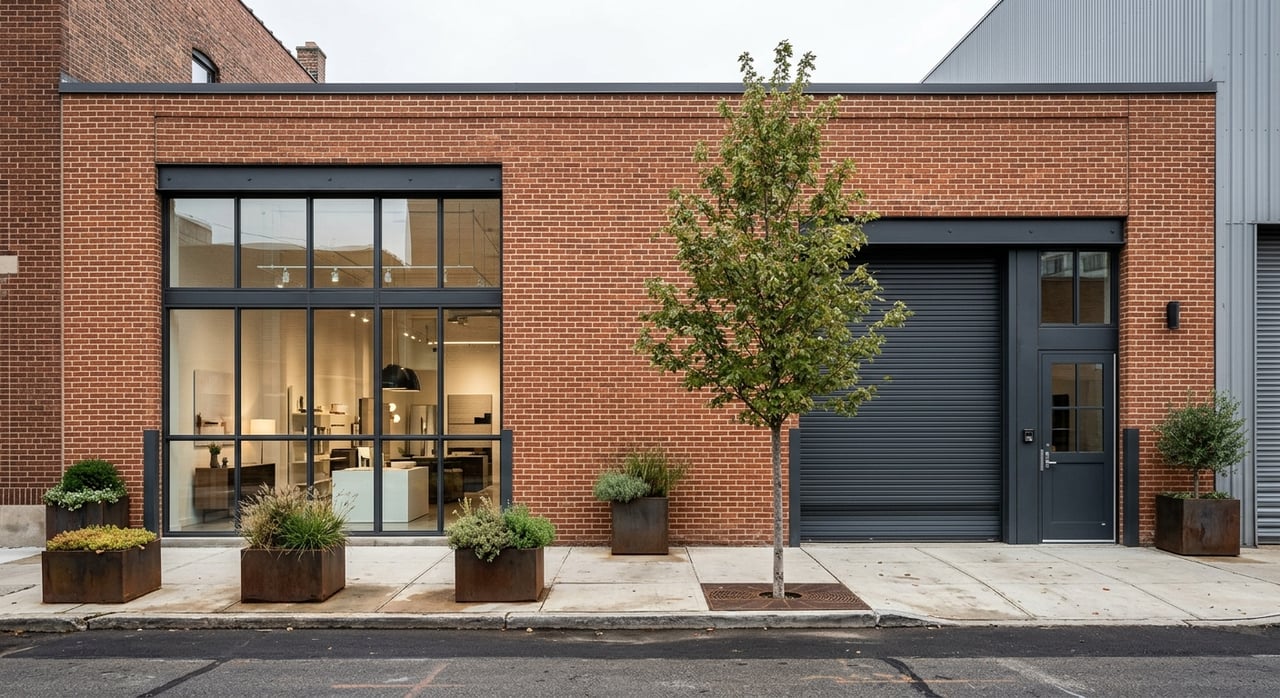
If you are looking for commercial space in West Nashville, the old labels do not tell the full story anymore. This part of the market is not just industrial, not just retail, and not just mixed-use. It is a transition zone where showroom and flex users can find practical, visible space with room to operate. In this post, you will see why West Nashville is becoming a strong fit for customer-facing trades, small-batch operators, and businesses that need both display space and back-of-house function. Let’s dive in.
Why West Nashville Fits Showroom Flex
West Nashville works best when you think in corridors and nodes, not as one uniform district. Metro’s planning framework points to Charlotte Avenue, White Bridge Pike, and the Centennial Boulevard area as key places where uses are evolving and investment is being shaped over time.
That matters if you need showroom or flex space. In a market like this, the right building is often one that sits on a visible corridor, supports customer access, and can handle a mix of front-end display and operational use behind the scenes.
West Nashville Is a Transition Market
Metro’s West Nashville planning approach shows that this area is being managed as a transition zone. The Charlotte Avenue Corridor Study guides future entitlements and public and private investment from I-440 to White Bridge Road, while a 2026 Metro staff report describes Centennial Boulevard as shifting from mostly industrial development toward a more urban mixed-use pattern.
You can also see that transition in how buffers are planned where industrial and residential uses meet. For owners and occupiers, that means building format, access, and entitlement details matter just as much as the street address.
Key Corridors to Watch
Charlotte Avenue and Charlotte Pike
Charlotte Avenue and Charlotte Pike remain the clearest fit for showroom-flex users in West Nashville. The corridor combines visibility, traffic, and a growing mix of commercial and adaptive-reuse properties that can support customer visits, product display, and light operational needs.
This stretch is also important because Metro uses it as a planning focus area. That gives you a better framework for understanding where future investment and redevelopment pressure may continue to reshape available space.
White Bridge Pike and Harding Pike
The White Bridge Pike and Harding Pike area is another important node, especially around Lion’s Head Village. Here, the mix leans toward office, retail, and repositioning opportunities that can work well for design-oriented users and service businesses that want street presence.
This part of West Nashville is also seeing continued mixed-use momentum. New development activity near White Bridge Pike supports the idea that the corridor is still being repositioned, which can create both opportunity and competition for space.
Centennial Boulevard and 51st Avenue North
Centennial Boulevard and 51st Avenue North sit within the west-side transition zone. As the area moves toward a more urban mixed-use pattern, existing buildings with adaptable layouts may become more valuable for businesses that do not need deep warehouse product but do need functional, flexible space.
For many occupiers, this is where West Nashville starts to look less like a traditional industrial search and more like a strategic infill decision. The right property can support branding, operations, and future flexibility all at once.
What Showroom Flex Looks Like Here
In West Nashville, showroom-flex product is usually not large-scale logistics space. It is more often shallow-bay, street-visible, and adaptable for different business models.
Examples in the market reflect that pattern. On Charlotte Pike, one 1,660-square-foot property at 5916 Charlotte Pike includes 3-phase electric, front and rear parking, and Commercial Service zoning, with marketing that points to uses like custom merchandise sales, local artists, small business, and light production. Nearby, 6119 Old Charlotte Pike offers 2,300 square feet with a garage converted into open workspace.
White Bridge Pike shows a similar format. At 280 White Bridge Pike, a 4,578-square-foot office and retail building includes whole-building availability, 13 front parking spaces, and reported traffic of 28,570 vehicles per day. At 95 White Bridge Pike, office suites and a former interior design space suggest the kind of finish-out that can translate well to showroom or design-center use.
Adaptive Reuse Is Part of the Story
West Nashville also stands out because adaptive reuse is not just a concept here. It is already part of the local playbook.
Sylvan Supply on Charlotte Avenue is a clear example. Former industrial buildings were transformed into creative office, retail, restaurant, and fitness space, showing how older stock can be repositioned for customer-facing uses without starting from the ground up.
Metro also supports the broader value of reuse. Its guidance notes that rehabilitation can reduce construction and demolition waste, and that projects may qualify for tax incentives or grants. Metro’s deconstruction guidance also highlights salvage opportunities for items like doors, cabinetry, windows, countertops, fixtures, and siding.
Which Businesses Are Best Positioned
Zoning and building stock together help explain who is most likely to succeed in West Nashville. Metro’s Commercial Service district is intended for retail, consumer service, office, and low-intensity manufacturing and storage. Industrial Restrictive supports light manufacturing within enclosed structures, while Industrial Warehousing and Distribution is designed for warehousing, wholesaling, and bulk distribution. Mixed-use districts like MUN and MUL support combinations of residential, retail, and office uses.
Based on that mix, West Nashville is a logical fit for several types of occupiers that need both presentation and function. Common matches include:
- Cabinet, flooring, lighting, appliance, and fixture showrooms
- Design-build firms and contractor offices
- Specialty distributors with customer-facing needs
- Small-batch manufacturers
- Trades and makers needing display area plus back-of-house support
The current use mix supports that direction. The 5916 Charlotte Pike property has reportedly housed a wine maker and retailer, a hemp shop, and custom design users, while projects like Sylvan Supply show how repurposed buildings can support a more public-facing commercial mix.
Why Existing Small-Bay Space Matters More Now
Broad market conditions are making existing showroom-flex stock more relevant. According to Cushman & Wakefield, Nashville industrial vacancy ended Q4 2025 at 4.5%, asking rents reached $9.38 per square foot, and available space was limited for tenants needing less than 50,000 square feet.
That backdrop matters in West Nashville. When small-bay availability is limited, older buildings with frontage, parking, and adaptable interiors can become more competitive than speculative new construction for many users.
It also means pricing discipline matters. If landlords of existing small-bay product retain leverage, occupiers and investors need to evaluate function, visibility, and entitlement risk carefully rather than assume every older building is a bargain.
Capital Is Following the Corridors
The repositioning story is not happening in isolation. Capital is already moving into West Nashville’s retail and mixed-use nodes.
CoStar reported that the Nashville West retail center on Charlotte Pike sold for $88 million and was 98% leased. In addition, Crescent Communities broke ground in May 2026 on NOVEL Richland Creek near White Bridge Pike and Harding Pike, with 277 apartments and about 4,800 square feet of ground-floor retail as part of a more walkable mixed-use destination.
Metro also approved a zoning change at 40 White Bridge Pike to allow a mixed-use development with up to 277 multifamily units. Taken together, these signals reinforce that the corridor is still evolving, and that nearby commercial users may benefit from growing activity, stronger visibility, and a broader daytime customer base.
What to Evaluate Before You Commit
In West Nashville, geography alone is not enough. Entitlements and site design can shape whether a property truly works for your business or investment plan.
Metro’s Charlotte Avenue study describes the plan as a starting point for future entitlements and public and private investment. The city also uses tools like corridor design overlays and SP rezonings, which can influence building placement, access, and street-facing form.
Before you move forward, focus on practical questions like these:
- Does the zoning align with your intended use?
- Is the building visible from the street?
- How easy is customer access and parking?
- Does the layout support both display and operational needs?
- Are there power, loading, or storage features that matter to your business?
- Could future corridor planning affect access, redevelopment, or site design?
These details often separate a workable showroom-flex opportunity from a space that looks good online but creates friction in day-to-day operations.
Why Local Guidance Matters
West Nashville is nuanced. The best opportunities are often not the biggest buildings or the newest projects, but the properties where location, use, and repositioning potential line up in a practical way.
That is especially true in a corridor where adaptive reuse, infill development, and zoning context all influence value. If you are searching for showroom or flex space, or evaluating a property for acquisition or repositioning, local market context can make a major difference in how you underwrite and negotiate.
If you want help evaluating West Nashville showroom or flex opportunities, connect with NEW SOUTH COMMERCIAL for principal-led guidance on site selection, leasing, investment sales, and repositioning strategy.
FAQs
What is showroom flex space in West Nashville?
- In West Nashville, showroom flex space usually refers to adaptable commercial space that combines customer-facing display area with back-of-house operational space, often in shallow-bay, street-visible buildings rather than deep warehouse product.
Which West Nashville corridors are strongest for showroom flex users?
- The main corridors to watch are Charlotte Avenue and Charlotte Pike between I-440 and White Bridge Road, White Bridge Pike and Harding Pike around Lion’s Head Village, and Centennial Boulevard with 51st Avenue North.
What types of businesses fit West Nashville showroom flex space?
- Based on local zoning and building formats, likely fits include cabinet, flooring, lighting, appliance, and fixture showrooms, design-build firms, contractor offices, specialty distributors, small-batch manufacturers, and other customer-facing trades.
Why are older West Nashville buildings attracting interest?
- Older buildings can offer street frontage, parking, adaptable interiors, and reuse potential at a time when Nashville’s small-bay industrial availability is limited, making existing flex stock more relevant for many occupiers and investors.
Why do zoning and entitlements matter in West Nashville?
- West Nashville is a transition market shaped by corridor studies, mixed-use planning, design overlays, and rezonings, so zoning and entitlement details can affect use, access, site design, and long-term property value.