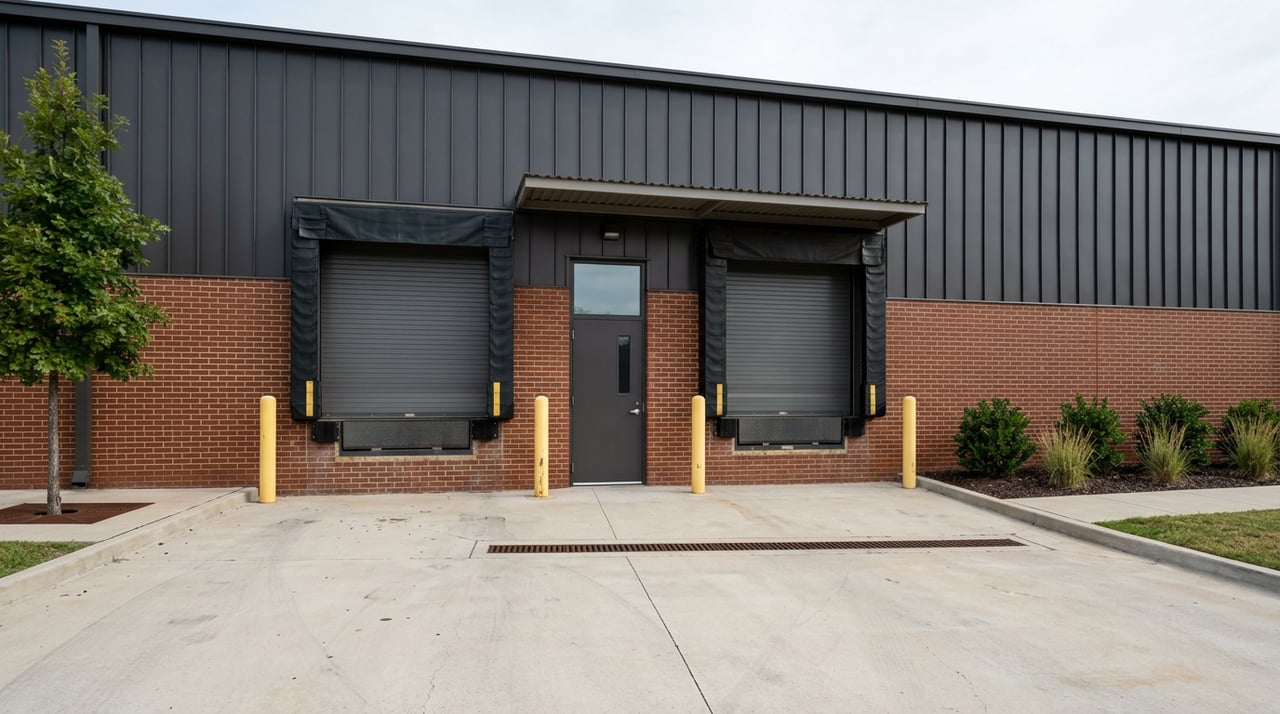
If you are weighing West Nashville for a last-mile or light industrial site, you are asking the right question. The submarket sits close to dense customer clusters and downtown, where shaving minutes per stop can move real dollars on your P&L. In this guide, you will see how to evaluate sites block by block, what zoning and access items to check first, and how to weigh rent against transportation and labor savings. Let’s dive in.
West Nashville at a glance
Market fundamentals are supportive. Recent reporting shows Nashville’s industrial market stayed active and tight through early 2025, with more than 800,000 square feet of Q1 move-ins and vacancy in the high 3 percent range. That backdrop continues to pull both infill last-mile users and regional distribution demand into the metro. See the market context in the latest overview from Colliers’ Nashville industrial market report.
Why last-mile here. Studies consistently show the final delivery leg accounts for a large share of end-to-end logistics costs, often in the 40 to 53 percent range. That cost profile is the reason many occupiers will pay a rent premium for urban-edge sites that cut drive-time and miles per stop. For a concise summary of this dynamic, review Capgemini’s research on last-mile delivery costs.
Best pockets to search
You will find most viable last-mile and flex options in established industrial and commercial corridors that balance access with nearby rooftops:
- Charlotte Pike and Charlotte Avenue. Infill lots and small-bay buildings near the 54th Avenue North area are typical targets. See an example near 54th Avenue North for the general product type.
- Robertson Avenue, Lellyett Street, and White Bridge Road corridors. Legacy light industrial sites here often suit parcel sorting, service fleet parking, and short-haul deliveries.
- Centennial Boulevard. Parcels and small yard sites can support outdoor storage or small-bay distribution. Here is a representative Centennial Boulevard yard site.
Pros and cons to weigh:
- Pros: proximity to downtown and dense neighborhoods, shorter routes, easier recruiting due to shorter commutes, and stock that can be operational quickly.
- Cons: limited large parcels for 100,000 square feet and up, tighter truck courts and trailer parking, stricter buffering and hours conditions, and higher per-square-foot rents than outer submarkets.
Zoning and permits to vet
Start with base zoning. Metro’s industrial districts most relevant to last‑mile are IWD for warehousing and distribution, IR for lighter enclosed production, and IG for higher-intensity manufacturing. Uses, buffering, and loading allowances will hinge on the base zone, and any Specific Plan or overlay can alter what is permitted. Confirm the designation with Metro’s zoning classifications.
Expect plan-driven conditions. The West Nashville Community Plan guides transitions between industrial and residential uses along corridors like Charlotte Avenue and Robertson Avenue, including buffer expectations and attention to truck traffic. Read the West Nashville Community Plan to understand likely access and screening requirements.
Typical reviews and studies. Many sites will need site plan review, stormwater compliance, and sometimes a Traffic Impact Study if truck volumes or new curb cuts affect collector roads. Metro’s overview on reading and applying Title 17 is helpful for scoping early asks. See Metro’s guide to the Zoning Code.
Freight access checklist
For each candidate parcel, evaluate the following before you advance to LOI:
- Interstate access: distance and drive time to I‑40, I‑65, and I‑24, plus I‑440 or Briley Parkway if you need to bypass downtown.
- Site geometry: truck court depth for 53-foot trailer maneuvers, curb-cut placement, turning radii, and the ability to stage trailers safely on-site.
- Local truck routing: whether your trucks must use residential streets and whether any supplemental policy areas limit heavy vehicle movements.
- Rail considerations: rare in infill West Nashville, but verify the status of any spur if rail is part of your service profile.
Labor supply insights
The Nashville MSA offers a deep pool in transportation and material-moving occupations. The Bureau of Labor Statistics reports about 122,460 jobs in this group, including approximately 40,500 laborers and hand freight movers, 22,080 stockers and order fillers, and 17,880 heavy and tractor-trailer drivers. Review the BLS Nashville occupational employment data when modeling labor availability.
What this means for you. Infill West Nashville sites tap a denser residential base, which can reduce commute times and support early-morning or multi-shift operations. Competition for workers remains real across logistics and service sectors, so confirm wages, turnover, and schedule preferences during planning.
Building specs that work
Last‑mile and light industrial operations favor buildings that support high throughput and safe, efficient loading. Typical targets:
- Clear height: 20 to 28 feet for small-bay last-mile and flex spaces. Larger regional cross-dock boxes often push 30 to 40 feet and above.
- Loading: a higher door-to-square-foot ratio, with multiple dock or grade-level doors per suite.
- Truck court and yard: modern specs often target around 120 feet of truck court depth plus adequate apron, but urban infill frequently runs tighter. You may need smaller trucks or off-site trailer staging.
- Power and utilities: automation and high-throughput sorting need stronger electrical service; confirm capacity with utility providers early.
For a visual on how door counts and courts scale by product type, review this Prologis spec example.
Rent vs transportation math
You should quantify whether an infill premium pays for itself through lower delivery miles and labor efficiency.
A quick framework:
- Calculate the annual rent premium: premium rate per square foot times building size times 12 months.
- Estimate transportation savings: miles saved per stop times cost per mile times stops per day times operating days per year.
- Add labor effects where proximity reduces absenteeism, turnover, or overtime.
- Compare the present value of savings to the rent premium over your lease term.
A short example. Assume a 40,000 square foot box in West Nashville costs 4 dollars per square foot more than a suburban option. The premium is 160,000 dollars per year. If closer routes save 1.5 miles per stop, with 400 stops per day at 1.10 dollars per mile, over 275 operating days, your annual route savings equal about 181,500 dollars. In this scenario, the infill premium is covered before you count any labor gains. Because the last mile can represent 40 to 53 percent of total delivery cost, even modest per-stop savings can move results.
Due diligence checklist
Run this checklist as soon as a site makes your shortlist:
- Confirm base zoning and any overlays or Specific Plans. Identify whether IWD, IR, or IG applies and note any special conditions.
- Pull the West Nashville Community Plan map and recent plan actions. Flag any corridor-specific buffering or truck access guidance.
- Ask Metro which thresholds trigger a Traffic Impact Study. Scope potential mitigation if peak-hour truck trips are material.
- Order a Phase I ESA and check floodplain, sinkhole, and historical contamination risks.
- Validate truck routing to interstates without residential cut-throughs. Get turning templates for your intended truck size.
- Confirm utility capacity and upgrade timelines with electric, gas, water, sewer, and fiber providers.
- Measure truck court depth, trailer staging, and employee parking by shift. Identify any off-site needs.
- Request comparable rents, operating expenses, and recent sales comps for similar West Nashville flex or industrial product to firm up your total cost model.
When to go suburban
If your requirement is a larger cross-dock or regional distribution hub above roughly 100,000 square feet, you will likely find better parcel depth and economics in Southeast or Wilson County and other outlying submarkets. The market pipeline and deal flow continue to favor those areas for scale, while West Nashville excels as a last-mile or satellite node where proximity matters. For broader context on submarket trends, see Colliers’ Nashville industrial market report.
Let’s plan your search
If you want to cut delivery miles, recruit more efficiently, and move fast on high-conviction infill, we can help you build a site plan and a shortlist that matches your operations. Reach out to NEW SOUTH COMMERCIAL to Request a Market Consultation.
FAQs
What makes West Nashville strong for last‑mile?
- Proximity to dense neighborhoods and downtown reduces per-stop miles and time, and the submarket offers established small-bay industrial stock that can be put to work quickly.
Which zoning districts allow distribution uses in West Nashville?
- IWD generally allows warehousing and distribution, IR allows lighter enclosed industrial uses, and IG allows higher-intensity industrial. Specific Plans or overlays can add conditions.
How should I evaluate interstate access for a candidate site?
- Measure drive time and distance to I‑40, I‑65, I‑24, and I‑440 or Briley Parkway, and confirm trucks can reach these routes without residential cut-throughs.
What building specs matter most for urban last‑mile operations?
- Aim for efficient loading with multiple doors, clear heights in the 20 to 28 foot range for small-bay needs, safe truck courts, and enough yard to stage vehicles without on-street spillover.
How do I test if an infill rent premium pays off?
- Compare the premium rent to estimated savings from reduced route miles and labor benefits, then evaluate the net over your lease term using a simple present value comparison.
When should I look outside West Nashville for industrial?
- If you need a large cross-dock above about 100,000 square feet, suburban submarkets like Southeast and Wilson County usually offer larger sites, deeper yards, and lower land costs suited to regional hubs.