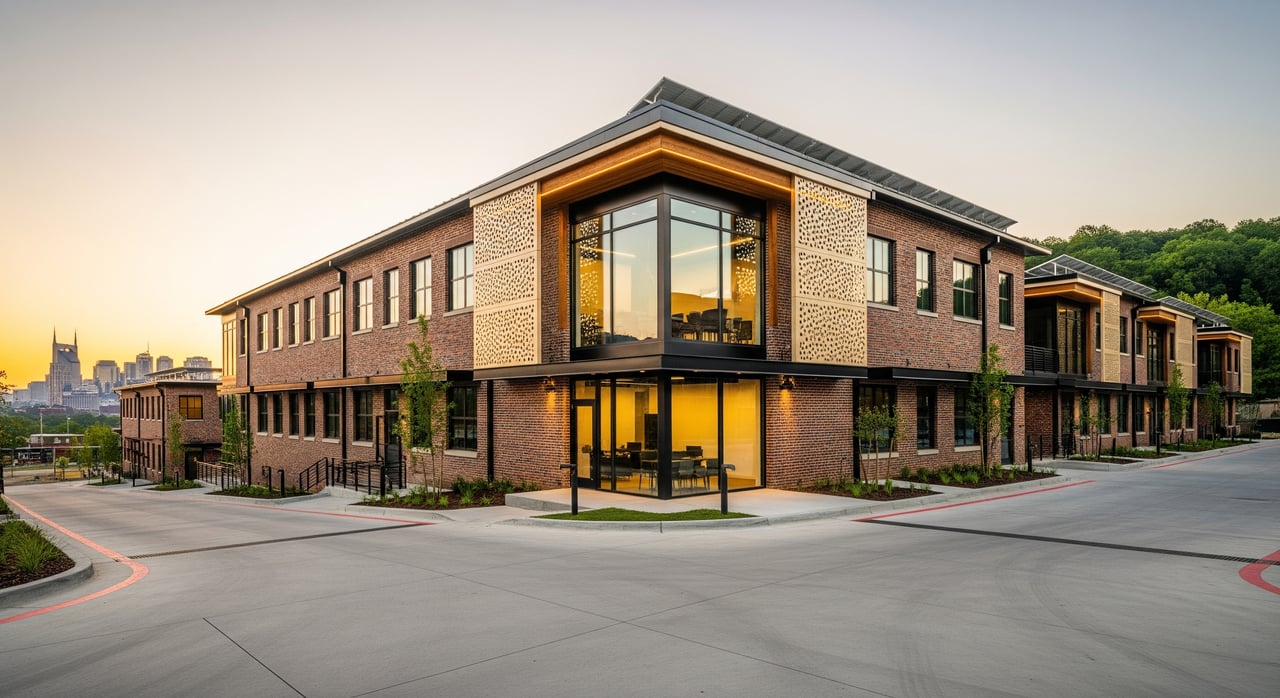
Are you hearing that West Nashville industrial is tight but not sure where demand is actually rising? You are not alone. Small-bay and flex users need close-in access, yet every pocket performs a bit differently based on logistics, density, and supply. In this guide, you will get a practical framework to spot the strongest micro-markets, what signals to verify, and how to act with confidence. Let’s dive in.
Quick take: where demand is building
West Nashville is not a single market. Demand concentrates where you get fast access to dense neighborhoods and interstate connectors, paired with scarce, right-sized space. You will see the clearest momentum in:
- Inner-West infill near the riverfront and Charlotte Pike where small suites lease quickly and creative flex conversions outpace older stock.
- The Charlotte Pike and I-40 frontage corridor where direct interstate access supports regional routes and last-mile runs.
- Bellevue and far west edges where larger small-bay product can deliver at lower land cost, attracting growing service and distribution users.
- The Northwest arc through Bordeaux and Whites Creek where affordability and interstate connectors draw trades, 3PLs, and light industrial users.
- West-adjacent interstate nodes at I-40 and I-65 that offer the best regional reach for multi-tenant parks and modern small-bay specs.
Why small-bay and flex are winning
Small-bay and flex space supports today’s last-mile economy. Same-day and next-day expectations push you closer to customers, and smaller footprints mean faster, more efficient operations. You see growing activity from 3PLs, local distributors, contractors and trades, light manufacturers, creative flex users, and cannabis-adjacent services where allowed. Typical active sizes range from about 1,000 to 25,000 square feet, with modern bays favoring dock or grade-level loading, functional clear heights, and room for vans or box trucks.
Inside West Nashville, land and zoning constraints limit new supply. That scarcity often lifts rents, shortens time on market, and encourages redevelopment of older buildings that can be repositioned with better loading and power. Your job is to pinpoint which pockets pair consumer proximity with practical truck access and where new, modern small-bay options are actually coming online.
Micro-market profiles to watch
Inner-West infill core
Why it matters: Close to the central business district and to high-density residential, the Inner-West infill area offers the shortest runs to customers. This is the first stop for last-mile users who value time savings and service radius.
Signals to watch: Rapid lease-up for suites under 10,000 square feet, positive net absorption across multiple quarters, and rising asking rents for modernized bays. Conversions to creative industrial or flex are a common theme, which is a strong demand tell.
Operational fit: If you run parcel or courier service, light fabrication, or service trades, focus on buildings with a mix of dock and grade doors, efficient column spacing, and room for vans. You may trade clear height for access, but you gain speed to market.
Constraints: Expect older inventory, tighter yards, and competition from residential or retail redevelopment. Zoning and neighborhood considerations can extend timelines for any changes of use.
Charlotte Pike and I-40 frontage
Why it matters: This west corridor gives you direct I-40 access while staying close to core neighborhoods. For next-day regional distribution with same-day local delivery, it is a logical midpoint.
Signals to watch: Positive absorption in multi-tenant parks, rebuilds or infill projects that add modern loading and clear heights suited to 5,000 to 25,000 square foot users, and low concessions on well-located bays. When vacancy dips faster than the MSA average, momentum is rising.
Operational fit: Dock-high or dock-high plus grade doors, 18 to 24 foot clear heights on newer product, and enough yard to stage vans or small trucks. Proximity to arterial connectors helps routings across West Nashville and downtown.
Constraints: Parcel sizes can be small, and curb access may limit heavy truck maneuvering on certain streets. Plan routes that avoid residential restrictions and weight-limited segments.
Bellevue and far west edges
Why it matters: Land is more available toward Bellevue and the Harpeth River edges, which can support larger small-bay footprints and service yards at a lower basis than the inner core. If you need more space per dollar, start here.
Signals to watch: Speculative small-bay projects in the 15,000 to 30,000 square foot range, build-to-suit inquiries, and active land trades. Absorption in this band points to expanding occupiers stepping up in size while staying within short drives to West Nashville neighborhoods.
Operational fit: Larger bays with room for warehouse and light assembly, better parking ratios, and sites that can support modest trailer or box-truck storage.
Constraints: Roadway pinch points and community land-use considerations can slow approvals. Floodplain segments along the Harpeth can limit coverage or require mitigation.
Northwest: Bordeaux and Whites Creek corridor
Why it matters: The northwest arc offers a more affordable path to scale while still touching key interstate connectors. It is attractive to regional 3PLs, trades, and light industrial users that need value without giving up reach.
Signals to watch: Increased leasing by logistics and service firms, industrial lot sales that price in future rent growth, and steady declines in vacancy within small-bay clusters. Track the share of leases under 25,000 square feet for a clear read on small-tenant demand.
Operational fit: Multi-tenant parks with a mix of dock and grade loading, functional power for light manufacturing, and yards that allow easy in-and-out for box trucks.
Constraints: Confirm travel times and routing to downtown and the airport during peak hours. Some streets have truck limitations, so route planning is key.
West-adjacent I-40 and I-65 interchange nodes
Why it matters: Interchange nodes west and southwest of downtown combine last-mile reach with regional distribution efficiency. These nodes often carry the lowest vacancy for modern small-bay product because they solve both local and regional needs.
Signals to watch: Rent premiums for newer bays with dock equipment and competitive clear heights, sustained lower vacancy compared to older stock, and limited concessions. Multi-tenant flex parks with cross-dock or multiple loading positions lease quickly when available.
Operational fit: If your model depends on fast interstate access for both local and regional runs, prioritize modern buildings near these nodes that can handle frequent truck turns.
Constraints: These locations can be highly competitive, and new supply is limited. Expect quicker decision timelines and tighter landlord leverage when listings hit the market.
Access and logistics essentials
For last-mile and regional-lite operations, access is the difference between margin and missed windows. In West Nashville, prioritize:
- Fast reach to dense residential pockets for same-day service. Short, reliable drive paths beat raw distance.
- Efficient access to I-40, I-65, and I-24, plus key connectors like Briley Parkway and I-440 where relevant.
- Practical truck routing that avoids residential restrictions and respects weight limits.
- Site geometry that supports your fleet, including van staging, turnaround radii, and modest trailer storage.
- Building specs that match your use case: dock or grade loading, clear height, power for equipment or light manufacturing, and HVAC needs for any temperature-sensitive uses.
What to verify before you sign or buy
Use this checklist to confirm that demand is truly rising in the pocket you are targeting:
- Net absorption for the last four quarters in your micro-market. You want multiple consecutive quarters of positive absorption.
- Vacancy trend compared to the broader Nashville MSA. A sharper local decline is a strong signal.
- Asking rents for small-bay and flex, plus concessions. Minimal free rent and rising effective rates point to landlord leverage.
- Lease counts and average deal size under 25,000 square feet. More deals in your target size confirms fit.
- Days on market for comparable suites. Shorter timelines indicate tight competition.
- New deliveries and pipeline. Determine whether new small-bay product is adding options or if existing stock is being absorbed faster than it is replaced.
- Land sales and price per acre trends. Rising land values often precede rent growth in infill areas.
- Truck routes, curb access, and yard constraints. Walk the site and drive the route at peak and off-peak hours.
- Zoning, permits, and any needed approvals for your intended use or improvements.
Risks and watchlist
- Land scarcity and redevelopment pressure in infill West Nashville can limit new supply and extend timelines.
- Zoning limits, rezonings, and neighborhood input can affect feasibility for industrial conversions.
- Floodplain constraints along the Cumberland and Harpeth rivers reduce buildable area and can raise costs.
- Parking and trailer storage limits on small urban parcels may not fit certain logistics models.
- Truck route restrictions and residential weight limits can change routing and delivery costs.
- Labor availability for specialized uses may vary by pocket, especially for technical light manufacturing.
- Watch local policy and infrastructure updates that alter access, such as designated truck corridors or interchange improvements.
Where to get current figures
For the most accurate, up-to-date read on West Nashville micro-markets, focus on these sources:
- CoStar for building-level leasing, vacancy, absorption, and days on market.
- Quarterly market reports from CBRE, Colliers, JLL, and Cushman & Wakefield for MSA benchmarks and submarket trends.
- Metro Nashville Planning and Metro Codes for permits, rezonings, and industrial land use guidance including NashvilleNext.
- Davidson County property records for parcel history and transaction data.
- Nashville Area Chamber of Commerce and Greater Nashville Regional Council for macroeconomic context.
- U.S. Census Bureau and American Community Survey for population and household density mapping.
- Tennessee Department of Transportation and the regional MPO for freight and corridor studies.
How NEW SOUTH COMMERCIAL helps you act
Choosing the right West Nashville pocket is not academic. It changes your route times, labor draw, buildout costs, and rent roll risk. You need a principal-led partner who blends brokerage discipline with owner-operator execution to source, underwrite, and secure the right deal.
At NEW SOUTH COMMERCIAL, you work directly with the principal to:
- Map your last-mile radius and match it to real micro-market options.
- Source on and off-market small-bay and flex listings aligned to your spec and budget.
- Underwrite rent growth, TI, and repositioning upside for modern small-bay product.
- Navigate zoning, permitting, and neighborhood considerations that affect timing and cost.
- Negotiate terms that protect your operations while keeping total occupancy cost in check.
Ready to pinpoint the right pocket and move early on the best space or site? Start a conversation with NEW SOUTH COMMERCIAL today.
FAQs
What defines West Nashville small-bay and flex demand today?
- Small-bay and flex demand is driven by last-mile delivery needs, proximity to dense residential areas, and limited modern inventory that pushes absorption and rent growth in the best pockets.
Which West Nashville pockets suit sub-10,000 square foot users?
- Inner-West infill and Charlotte Pike frontage often see the fastest lease-up for smaller suites, thanks to customer proximity and direct access to major arterials.
Where can I find larger small-bay options near West Nashville?
- Bellevue and far west edges tend to offer bigger footprints and more yard capacity at lower land costs compared to infill locations.
How do I confirm that demand is rising in my target area?
- Verify several quarters of positive net absorption, falling vacancy versus the MSA, shorter days on market, and limited concessions on comparable listings.
What building specs are most important for last-mile operations?
- Dock or grade-level loading, functional clear heights, adequate power, and enough yard or parking for vans and box trucks are top priorities.
What local risks could slow my project or lease-up?
- Zoning limits, community input, floodplain constraints along the Cumberland or Harpeth, and truck route restrictions can affect timelines and costs.