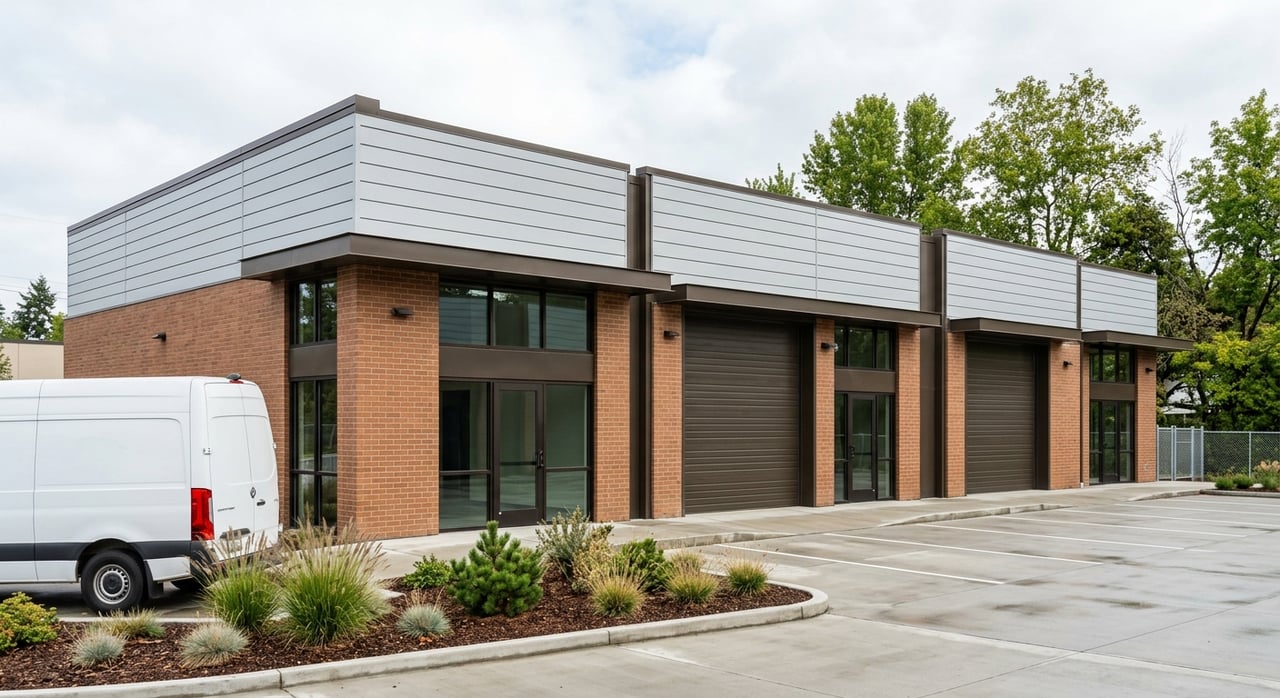
If your business needs to stay close to customers, crews, and core Nashville neighborhoods, West Nashville deserves a hard look. This is not a far-flung warehouse district built for long regional hauls. It is a tight infill market where light industrial users can stay central while still finding practical space options. Let’s dive in.
West Nashville fits urban industrial needs
West Nashville stands out because it blends industrial, commercial, institutional, and neighborhood uses rather than separating them into a single-purpose industrial park. Metro planning materials describe the area as a mixed-use part of Davidson County, with industrial activity concentrated in places like Cockrill Bend and along established corridors such as Charlotte Pike, Highway 70, and Highway 100. That mix matters if your operation depends on being near people, projects, and daily service demand.
For many light industrial users, that location profile is a feature, not a drawback. If you run a service business, specialty trade operation, repair function, or small-scale manufacturing use, being embedded in the urban fabric can reduce drive times to customers and make day-to-day dispatch easier. In practical terms, West Nashville works best when central access matters as much as warehouse functionality.
Central access is the biggest advantage
One of West Nashville’s clearest strengths is how quickly it connects you to the rest of the city. Marketed industrial properties in the area highlight immediate access to Briley Parkway and connections to I-40, I-440, I-24, and I-65, with some locations about 15 minutes from downtown. That kind of road network can support businesses that need to move between job sites, customer locations, and suppliers throughout the day.
This matters even more in a service-heavy market like Nashville. Metro has identified Charlotte Avenue as one of the city’s most-used corridors, and it also notes slower travel times along the corridor. For light industrial users, that helps explain why an infill location can make sense. If your team makes frequent urban service calls, starting closer to the work can be more efficient than commuting in from a suburban industrial park.
The submarket is tight
West Nashville is not a market where you should expect a long list of easy options. Recent broker reporting places industrial inventory in the submarket at roughly 7.0 million to 8.24 million square feet, depending on how boundaries are defined. Vacancy is extremely limited, with one report showing 0.0% vacancy and another showing 1.5%.
That tightness tells you two things. First, users clearly value the submarket. Second, timing and preparation matter. If you want to lease or buy in West Nashville, it helps to define your space needs early and move decisively when the right opportunity appears.
Small-bay demand is a real story here
A major reason West Nashville works for light industrial users is that the broader Nashville leasing market remains heavily weighted toward smaller tenants. In one recent market report, 75.2% of new industrial leases signed in 2025 were under 50,000 square feet. Another report put the average deal size at 27,800 square feet.
That trend aligns well with the kinds of users often drawn to West Nashville. Many businesses do not need a massive bulk warehouse. They need a functional bay, decent access, parking, and a location that keeps them close to clients and labor. West Nashville’s mix of older industrial buildings and infill warehouse product can support that need.
Space options cover a wide range
Current public listings in West Nashville show available industrial spaces ranging from small suites to much larger blocks. Examples include spaces around 4,480 square feet, 7,150 square feet, 11,000 square feet, 13,460 to 15,600 square feet, 19,050 square feet, and larger options above 100,000 square feet. Newer infill projects have also introduced spaces ranging from roughly 38,640 square feet up to 300,000 square feet, plus a larger project over 500,000 square feet.
That range gives the submarket flexibility. You may be able to find:
- Smaller contractor or service bays
- Mid-size warehouse space for distribution or operations
- Older functional buildings with practical layouts
- Newer infill product with more modern loading and parking configurations
In short, West Nashville is not just one type of industrial market. It can serve smaller trades and repair users, growing regional companies, and larger occupiers that still want a central Nashville location.
Infill convenience can come at a premium
The tradeoff for centrality is often cost. Current listing pages show asking rates for smaller infill suites in roughly the mid-teens per square foot, with examples ranging from $14.27 to $17.00 per square foot for spaces between about 7,150 and 15,600 square feet. Some larger spaces are listed without published rates.
This does not establish a formal submarket average, but it does point to a common infill pattern. Smaller, well-located industrial space can command a premium because it is harder to replace. If your business values faster access to customers, lower dead-drive time, and a more central labor position, that premium may still make operational sense.
Zoning matters more in West Nashville
Because West Nashville is a mixed-use infill area, zoning and entitlement review deserve close attention. Metro Nashville’s zoning code includes IR, which is intended for light manufacturing at moderate intensities, and IWD, which is intended for warehousing, wholesaling, and bulk distribution. Those classifications are among the most relevant for light industrial and trades-oriented uses.
Still, zoning alone is not the whole story. West Nashville planning guidance emphasizes buffers between industrial and residential uses, along with thoughtful access design near mixed-use areas. If you are evaluating a site, you should look closely at how truck movement, parking, loading, and neighboring uses fit together on that specific property.
Site due diligence is essential
West Nashville’s location and maturity make it attractive, but they also make due diligence more important. Official Metro planning and hazard materials note Cumberland River frontage, flood-prone land, and steep slopes in parts of the community. One official plan states that about 12% of the community is within floodway or 100-year floodplain areas, while about 9% has steep slopes.
That does not mean West Nashville is off-limits. It means you should evaluate each property on its own merits. Before committing to a site, it is wise to confirm:
- Zoning and permitted use
- Access and circulation constraints
- Parking and loading functionality
- Floodplain or floodway conditions
- Topography and site limitations
- Any entitlement issues tied to corridor planning
For many users, this is where local market knowledge adds real value. In an infill market, the right deal is often less about square footage alone and more about operational fit.
Charlotte Avenue shapes future decisions
Another reason West Nashville deserves attention is that Metro’s planning work along Charlotte Avenue remains active. The corridor plan is used as a basis for future entitlements, public investment, and zoning changes. That tells you the area is still evolving.
For occupiers and investors, that can create both opportunity and complexity. On one hand, continued corridor planning can support long-term improvements and reinforce the area’s role in the urban economy. On the other hand, it means each site should be viewed through both current utility and future context.
Who benefits most from West Nashville
West Nashville is usually strongest for users who care about central service coverage more than edge-of-metro scale. If your business needs to reach job sites across Nashville, support urban clients, or keep teams close to the city core, this submarket can be a strong fit. It is especially compelling when you need industrial functionality without giving up access to central neighborhoods and business corridors.
The profile often aligns with users such as:
- Service contractors
- Specialty trades
- Repair and maintenance operators
- Small manufacturers
- Urban logistics or support operations
- Regional companies needing infill warehouse space
The common thread is simple. These users benefit from being close in, even if that means working within tighter site layouts and a more competitive availability picture.
Why West Nashville works
At a high level, West Nashville works because it balances two needs that are often hard to combine. You get urban proximity and industrial utility in the same submarket. That is not always easy to find in Nashville.
The market is tight, the land-use context is more complex than a suburban park, and not every site will fit every operation. But if your business values centrality, customer access, and flexible infill product, West Nashville can be one of the more practical light industrial plays in Davidson County.
When you need help sorting through available space, zoning fit, and site-level tradeoffs in West Nashville, NEW SOUTH COMMERCIAL offers principal-led guidance grounded in local market knowledge.
FAQs
Why is West Nashville a good fit for light industrial users?
- West Nashville offers a central infill location, access to major road connections, limited industrial vacancy, and a mix of smaller bays and larger warehouse options that can work for many light industrial operations.
What types of businesses fit West Nashville industrial space?
- West Nashville often fits service contractors, specialty trades, repair businesses, small manufacturers, and other users that need industrial functionality close to customers and job sites.
How much industrial space is available in West Nashville?
- Recent public listings have shown a broad range of options, from spaces around 4,480 square feet to larger blocks above 100,000 square feet, though overall vacancy in the submarket remains tight.
What zoning should you review for West Nashville light industrial property?
- In Metro Nashville, IR and IWD are two zoning classifications that align most closely with light industrial, warehousing, wholesaling, and related uses, but site-specific review is still important.
What due diligence matters for West Nashville industrial sites?
- You should review zoning, access, parking, loading, floodplain conditions, topography, and any planning or entitlement issues that may affect how the property can function.
Are West Nashville industrial rents higher for smaller spaces?
- Current listing examples suggest that smaller infill suites can carry a pricing premium, which is common in central locations where industrial product is limited and demand is strong.